
You know that moment.
When you suggest a board game and the kids groan like you asked them to fold laundry.
I’ve been there. More times than I care to admit.
Most so-called educational games feel like homework in disguise. You can smell the test coming from across the room.
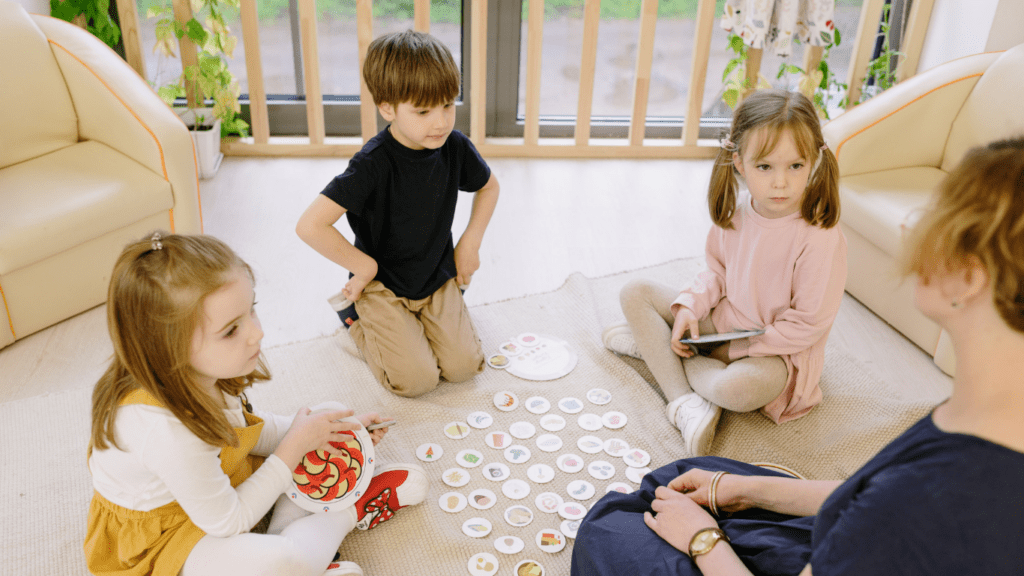
But real learning doesn’t need flashcards or timers. It happens when everyone’s leaning in, laughing, forgetting they’re even supposed to be learning.
That’s why this list isn’t about “learning games.” It’s about Active Learning Games Famparentlife (games) where skill-building is the side effect, not the main event.
I’ve tested every one with actual families. Not just my own. Dozens of them.
Ages 5 to 12. Siblings who usually argue over whose turn it is.
What you’ll get here? Five games that actually work. No fluff.
No fake fun. Just real play that sticks.
The Secret Ingredients of a Truly ‘Engaging’ Educational Game
I’ll tell you straight: if it feels like school, it’s not working.
The best Active Learning Games Famparentlife don’t teach by shouting facts. They teach by making you do something real (plan,) guess, build, argue, lose, try again.
You know that buzz when your kid stares at the board, muttering about wheat and ore? That’s not playtime. That’s strategic thinking in action.
In Catan, you’re not memorizing economics. You’re trading sheep for bricks while calculating risk. You learn scarcity because you feel it.
When someone rolls a seven and you panic about losing cards.
Creative problem-solving isn’t about right answers. It’s about messy interpretation.
Mysterium forces players to decode surreal art clues. One person sees “ghost,” another sees “broken clock.” There’s no manual. Just intuition, pattern-matching, and saying out loud what your brain just connected.
Collaborative play flips the script entirely.
No more “my turn / your turn” tension. Instead: everyone huddles over Pandemic, sweating over infection rates, choosing who flies where. You win or lose together.
Not against each other.
That’s how kids learn teamwork without being told to “share nicely.”
It’s not magic. It’s design that respects how brains actually work.
Want real examples? I’ve tested dozens with families (Famparentlife) has the full list.
Skip the flashcards. Start with the game that makes them ask for one more round.
Because learning sticks when no one’s watching the clock.
Screen-Free Brain Builders: Real Games That Stick
I stopped buying screen-based learning toys two years ago.
Turns out, my kids learned more in one game of Ticket to Ride than three weeks of “educational” apps.
Ticket to Ride (ages 8+) teaches geography without calling it that. You claim train routes between cities. You plan ahead.
You weigh risk (do) you grab that long blue route now, or wait and hope no one blocks you? Why families love it: It plays fast, scales well for new players, and nobody’s staring at a screen while arguing over whose turn it is. (Yes, I’ve seen that argument.)
KingDomino feels like stacking pancakes (until) you realize you’re doing multiplication in your head. Match terrain types, count squares, multiply rows by columns to score. No worksheets.
No timers. Just tiles flipping and points adding up. Why families love it: It’s under 15 minutes.
You can play it after dinner. And yes, your 7-year-old will beat you if you zone out.
Forbidden Island is the anti-Monopoly. Everyone wins or everyone loses. You talk.
You delegate. You decide who moves where, who shores up sinking tiles, who grabs the treasure. There’s no “take two turns” nonsense (just) shared stakes and real consequences.
Why families love it: It ends before anyone melts down. And it’s the only game where my teenager actually asks, “Can we play again?”
These aren’t filler games. They’re Active Learning Games Famparentlife (the) kind where learning hides in plain sight. Not because they’re “designed for growth,” but because they ask real questions: What’s the shortest path?
How many points is this worth? Who should fix the leak right now?
Pro tip: Keep Forbidden Island on the coffee table for 20-minute evening resets. Works better than deep breathing. (And yes, I tried both.)
Digital Games That Actually Teach (Without) the Eye Rolls

Not all screen time is equal. Some of it makes your kid stare blankly at a cartoon. Some of it gets them arguing with you about redstone logic at 7 p.m.
I’ll say it: Minecraft Creative Mode is digital LEGO with consequences. You build together. You plan bridges before laying stone.
You wire up doors and lamps using Redstone. Which is basically basic circuitry disguised as glowing dust. PC or console.
No mobile version worth the hassle.
Then there’s Overcooked. It’s chaos. You’re chopping onions while someone else burns soup while your kid yells “THE FIRE EXTINGUISHER IS ON THE OTHER SIDE!”
That’s not noise.
That’s real-time communication training. Task delegation. Pressure testing.
Play it on Switch or PS4. Not PC (the) controls get weird there.
Scribblenauts? It’s vocabulary bootcamp in disguise. Type “pulley” and it appears.
I go into much more detail on this in Learning Activities.
Type “photosynthesis” and you get a plant, sunlight, and little oxygen bubbles. It rewards curiosity, spelling, and wild thinking. Mobile only.
Yes, really.
None of these are passive. You don’t watch. You do.
You talk. You fail. You try again.
That’s why I keep a running list of what actually sticks (like) how to turn game time into real thinking time.
You’ll find more of those ideas in our Learning activities famparentlife roundup.
Active Learning Games Famparentlife isn’t a buzzword.
It’s what happens when your kid explains how a lever works. Because they just used one to lift a boulder in Scribblenauts.
Skip the “educational” apps that feel like worksheets with sprites.
Go for games where learning sneaks in sideways.
My rule? If you catch yourself saying “Wait (how) did that work?” out loud? You’re doing it right.
No trophies required. Just shared worlds. Shared mistakes.
Shared “aha” moments.
Turn Your Game Shelf Into a Classroom
I’ve watched kids zone out during flashcards but argue for twenty minutes about why their Monopoly plan is unbeatable.
That’s not distraction. That’s Active Learning Games Famparentlife in action (if) you know how to tap it.
The ‘Storyteller’ Rule: Make them explain every move out loud. Not just “I bought Park Place” (why?) What were they thinking? This isn’t theater.
It’s communication practice disguised as play.
What if you had one less resource? What if the rules changed mid-game? Ask it.
Pause. Let them sweat a little. That’s where real thinking lives.
Play Settlers of Catan? Talk about your grocery budget. Playing Civilization?
Pull up Google Maps and find where Babylon actually was. (Spoiler: it’s dusty.)
You don’t need new games. You need new questions.
More ideas like this live in Active Learning Activities Famparentlife
Game Night Starts Friday
I know how hard it is to find games that don’t bore the adults or check out the kids.
You want fun. You want learning. You want everyone to actually show up.
Not another “educational” game that feels like homework.
You’ve got real options now (games) where plan, creativity, and teamwork happen naturally. No forced lessons. No guilt.
That system I gave you? It works for any game you already own.
You don’t need more stuff. You need better choices.
Active Learning Games Famparentlife gives you both.
So pick one game from the list. Just one.
Look at your calendar. Block 90 minutes this weekend.
Your family will remember that night (not) because it was perfect, but because it was real.
Do it.
 David Withers – Senior Parenting Advisor David Withers brings over 15 years of expertise in child development and family dynamics to his role as Senior Parenting Advisor at Makes Parenting Watch. A respected voice in the parenting community, David has worked extensively with families, helping them navigate the complexities of raising children through every phase of life—from infancy to adolescence. His articles are known for their evidence-based approach, offering parents practical, actionable tips on topics such as sleep training, positive discipline, developmental milestones, and fostering emotional resilience in children. In addition to his writing, David conducts workshops and webinars to provide personalized advice to parents dealing with specific challenges. His deep understanding of child psychology and development ensures that Makes Parenting Watch remains a valuable and reliable resource for parents seeking guidance in today’s fast-paced world.