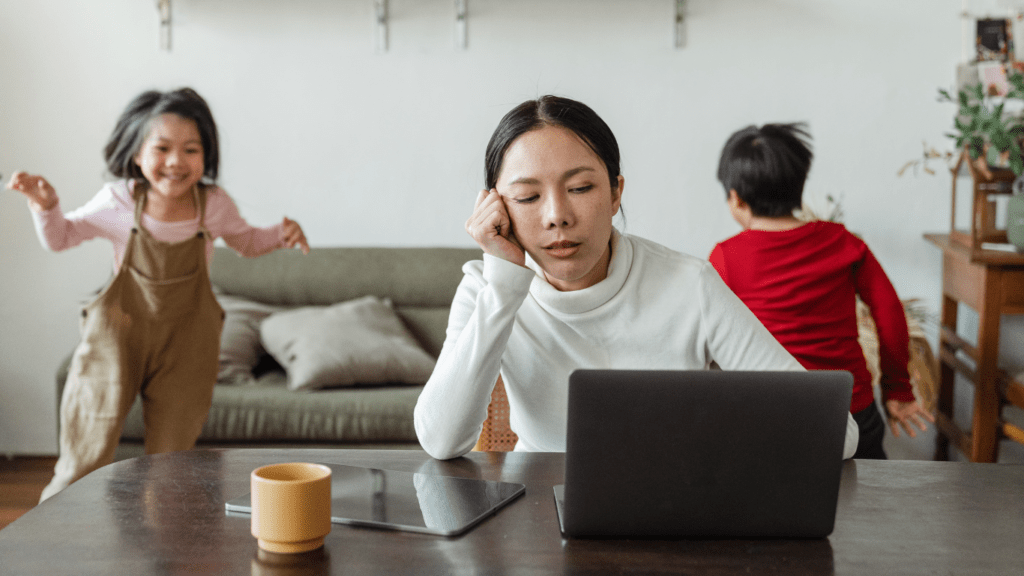
You’re standing in the kitchen at 4:17 p.m. Coffee’s cold. Laundry’s piled on the couch.
Your kid just asked for help with math. And you haven’t looked at a fraction since 1998.
Sound familiar?
I’ve watched parents try to squeeze learning into cracks between Zoom calls and bedtime stories. They grab resources that demand lesson plans, prep time, or perfect focus. Spoiler: none of that exists in real life.
This isn’t theory.
It’s not another curriculum disguised as “flexible.”
It’s Family Education Nitkaedu. A set of tools built in real homes, tested across wildly different schedules and learning styles.
I’ve spent years designing and refining these resources with families (not) classrooms. Not labs. Not Pinterest boards.
Actual people who forget the printer ink runs out and still need to make learning happen.
You’ll get four things here. Everyday integration (no extra time needed). Age-flexible activities (one idea, multiple kids, zero rework).
Low-prep strategies (seriously (under) two minutes). And caregiver confidence (not guilt, not pressure, just clarity).
No fluff. No jargon. No pretending your life is quieter than it is.
Just resources that work (because) they were made by real life, not for some ideal version of it.
Learning Without Lesson Plans: Just Live and Teach
I stopped making lesson plans when my kid asked why the sky was blue during toothbrushing.
That’s when I realized learning doesn’t wait for quiet time or a desk. It happens in the grocery line, on the bus, while stirring pancake batter.
Cooking teaches fractions. Commute time builds pattern recognition. Bedtime stories model emotional vocabulary. frustrated, tentative, relieved.
Not just happy or sad.
Traffic Light Math: At red lights, count backward from 10. For older kids, add multiplication: “If each light stays red for 45 seconds and we hit 3 lights, how many total seconds?”
Ingredient Fractions: “We need ¾ cup flour. Can you fill the ¼ cup three times?” Adjust for age.
Use measuring cups for 4. 6 year olds, decimals or percentages for 10 (12) year olds.
Story Pause: Mid-bedtime, stop and ask: “What would you feel if that happened to you?” Not “What did the character feel?” That shift makes it personal.
People still think real learning needs silence and structure. It doesn’t. Studies show incidental learning.
Stuff picked up during daily routines (sticks) longer than forced drills (source: Journal of Educational Psychology, 2021).
Nitkaedu helped me trust this. It’s not about adding more. It’s about noticing what’s already there.
Which daily routine already feels like a natural fit for one of these?
Don’t overthink it.
Just start where you are.
Family Education Nitkaedu isn’t a program.
It’s permission to teach without ceremony.
One Journal, Three Kids, Zero Headaches
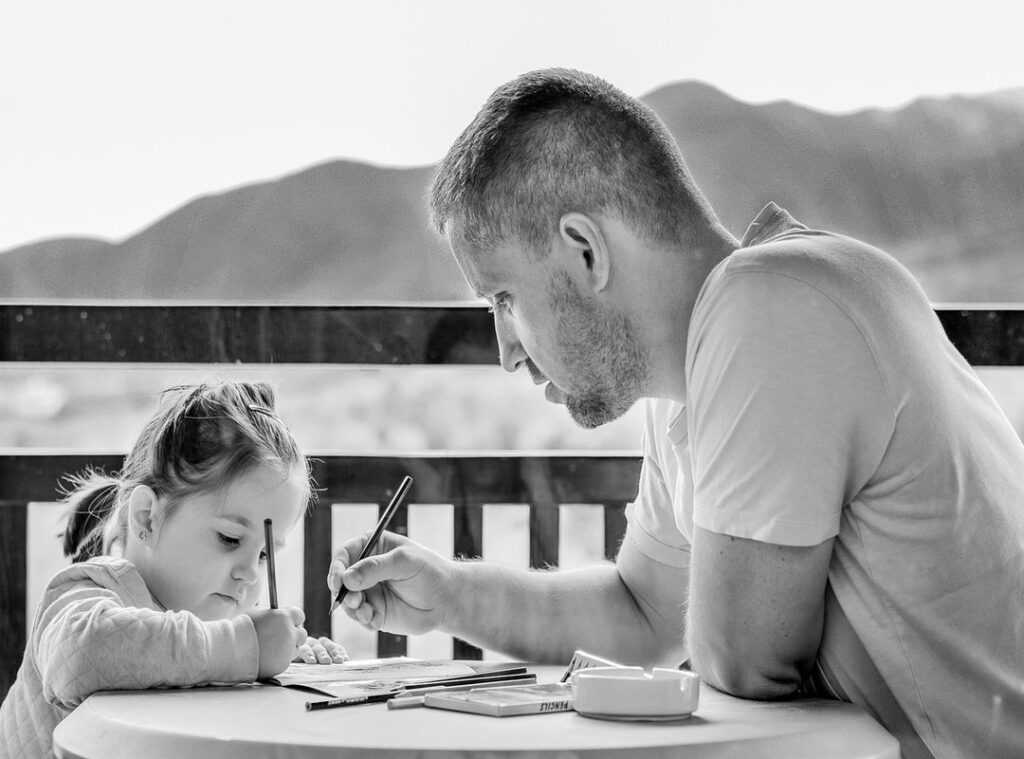
I use the same nature observation journal for my 5-year-old, my 8-year-old, and my 11-year-old. Not three different versions. Not three separate lesson plans.
Just one spiral-bound notebook.
My youngest draws worms. Big ones. With legs.
(They don’t have legs. She doesn’t care.)
My middle kid labels the worm and writes “It lives in dirt. It helps plants.”
My oldest sketches root structures, notes soil pH from a kit, and jots: “If moisture drops 20%, will movement decrease?
Test next Tuesday.”
That’s Family Education Nitkaedu in action (not) a curriculum, just clarity.
Most age-banded resources are nonsense. They force separation. They make you prep three times.
Meanwhile, kids learn by watching each other. My 5-year-old copies her brother’s labels. He explains his hypothesis to her like it’s obvious.
That modeling? That mentoring? You can’t fake that with worksheets.
Here’s what actually scales:
- Open-ended question cards (e.g., “What changed?” → draw it → graph it → argue why)
- Story-starters (“The squirrel forgot where it buried…” → finish it → map the journey → rewrite as a myth)
- Measurement kits (ruler → tape measure → calipers + percent error calc)
- Sound logs (hum → name the pitch → record decibels → compare urban/rural)
- Seed journals (plant → draw weekly → track germination rate → design a controlled experiment)
We used the Same Podcast series on birds. 5-year-old drew a nest. 8-year-old wrote five facts. 11-year-old debated conservation policy using episode quotes.
The 10-Minute Rule: If It Takes Longer, It Fails

I tried the “learning hour” thing. Lasted three days.
If setup takes more than 10 minutes, it dies before lunch. Not maybe. Not sometimes.
It dies.
That’s why I use four things that launch in under two minutes. No printer. No login.
Question Jar: Grab a coffee can. Write one question per slip (“What’s something blue that isn’t painted?”). Swap themes weekly (weather, textures, sounds).
No scrolling.
When attention shrinks? Pull two slips (not) one. Less pressure.
More surprise.
Curiosity Walks: Step outside. Name three things you notice (not) just see. A crack in the sidewalk.
A bird call. The smell of wet pavement. Jot them on your phone.
Revisit one tomorrow. Interruption happens? Pause.
Resume exactly where you left off. No restart needed.
Story Swap: You tell a 90-second story from your day. Then they do. No prep.
No edits. No “make it educational.” Just talk. Motivation dips?
Say “Your turn (and) I’ll guess the ending.”
Skill Spotlight: At dinner, name one real skill used today. “You measured the flour.” “You waited your turn.” That’s it.
Consistency builds neural pathways (not) marathon sessions. Research backs this. (Lally et al., European Journal of Social Psychology, 2010.)
Nitkaedu nails this rhythm without fluff.
Family Education Nitkaedu works because it respects your time. Not your guilt.
Stop prepping. Start doing.
Caregiver Confidence Isn’t About Knowing Everything
I used to panic before helping my kid with math. What if I explain it wrong? What if they think I’m dumb?
Turns out (that) fear is normal.
And useless.
“I’m not a teacher.”
“I don’t know enough science.”
“What if I get it wrong?”
Yeah. I’ve said all three. (So have you.)
Here’s what actually moves the needle: noticing, naming, and wondering. Not lecturing. Not memorizing facts.
Just pausing. Pointing. Asking.
Research shows kids learn more from those three actions than from polished lessons. They build curiosity. They start thinking about thinking.
That’s metacognition. And it sticks.
Try this 3-step check after any learning moment:
Did I listen fully? Did I ask one open question? Did I model curiosity.
Even about something I don’t know?
Swap “I need to teach this” for “I get to explore this with them.”
Say it out loud. It rewires your brain faster than you’d guess.
You don’t need perfect content. You need presence. You need honesty.
You need to show up. Messy and real.
That’s where real learning lives. Not in flawless delivery. In shared attention.
For more on how everyday moments become learning anchors, check out the School education nitkaedu system. It’s built for people like us (not) experts. Just humans showing up.
Family Education Nitkaedu starts right there.
You Already Know What to Do
I’ve watched families panic over “doing it right.”
They wait for perfect conditions. They overplan. They burn out.
Family Education Nitkaedu isn’t about perfection. It’s about showing up. Even for ten minutes.
With real attention.
You don’t need training. You don’t need more time. You just need to choose one thing from section 3 (and) try it once this week.
Watch what happens. Not just with your child. But with your own breath.
Your shoulders. Your sense of control.
That tiny act? It rebuilds trust. In yourself, in the process, in your family.
So pick your one thing.
Do it.
Then tell yourself: That counted.
 David Withers – Senior Parenting Advisor David Withers brings over 15 years of expertise in child development and family dynamics to his role as Senior Parenting Advisor at Makes Parenting Watch. A respected voice in the parenting community, David has worked extensively with families, helping them navigate the complexities of raising children through every phase of life—from infancy to adolescence. His articles are known for their evidence-based approach, offering parents practical, actionable tips on topics such as sleep training, positive discipline, developmental milestones, and fostering emotional resilience in children. In addition to his writing, David conducts workshops and webinars to provide personalized advice to parents dealing with specific challenges. His deep understanding of child psychology and development ensures that Makes Parenting Watch remains a valuable and reliable resource for parents seeking guidance in today’s fast-paced world.